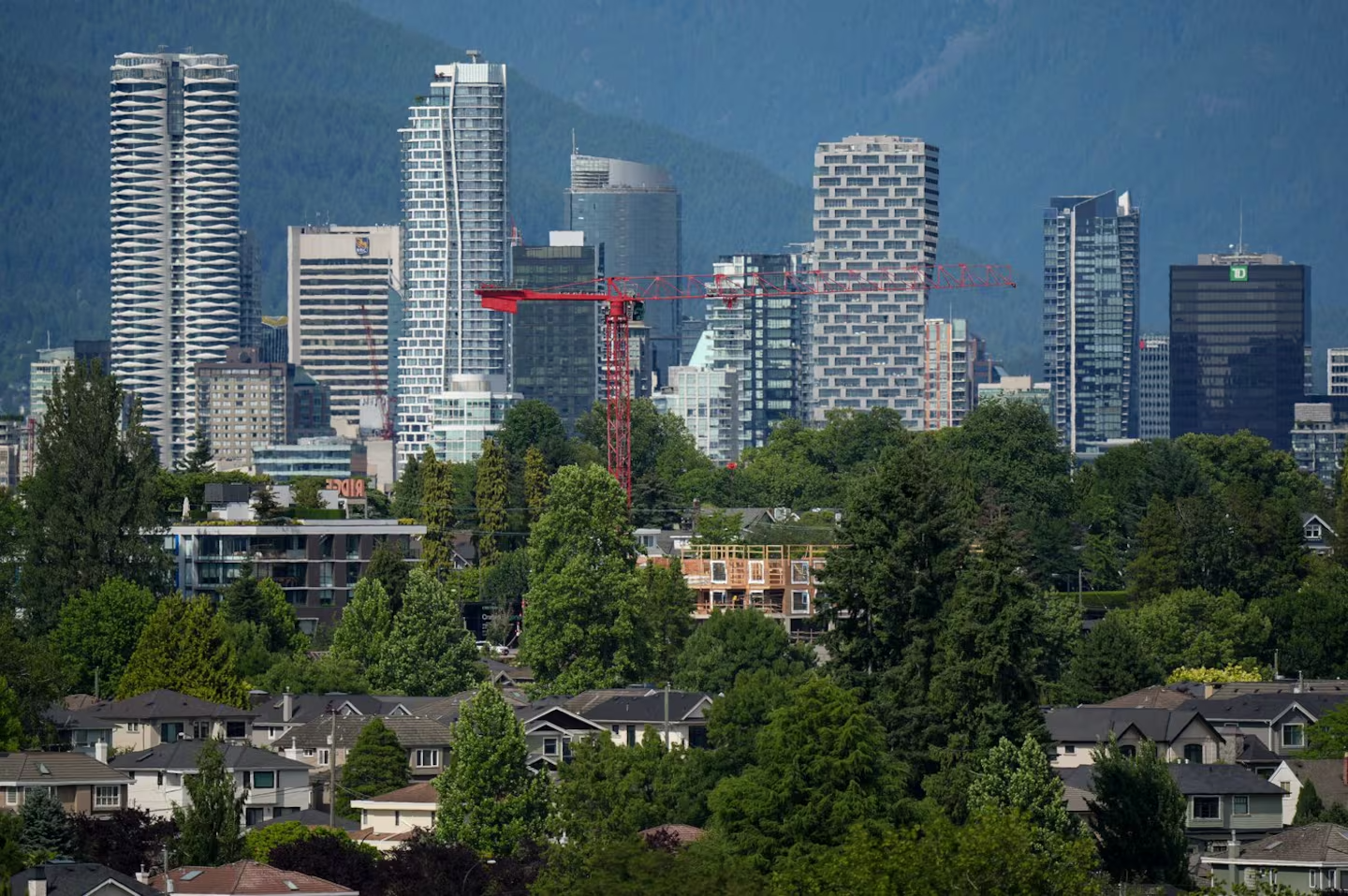
Toronto and Vancouver ranked among weakest housing markets in UBS report
Toronto and Vancouver have plummeted to rank among the world’s weakest housing markets, with Toronto suffering a dramatic four-year descent from the global peak according to UBS’s latest annual real estate bubble index. Cumulative price corrections across both Canadian metropolitan areas, driven by federal foreign buyer bans, aggressive monetary tightening, and severe inventory gluts, have occurred.
The UBS index tracks residential valuations, average income-to-price ratios for 650-square-foot units, and rental yield comparisons across 23 global cities. Toronto now sits within the moderate bubble risk category. Housing values in the city have tumbled roughly 30 percent from their early 2022 peaks, fueled by single-digit year-over-year declines of approximately 10 percent over the preceding twelve months. Between 2014 and 2022, Toronto marked one of the fastest expansions recorded by the index, doubling home prices on the back of rapid demographic growth and heavy speculative capital inflow. That momentum has completely inverted under the weight of higher interest rates.
Vancouver Inventory Reaches Multi-Decade Lows
Vancouver faces parallel economic headwinds, recording a cumulative price correction of approximately 20 percent from its own 2022 high-water mark. According to the UBS report, new home sales in the West Coast market have plunged to a 25-year low. Persistently high inventory, sluggish regional economic expansion, sticky inflation pressures, and the constant threat of further monetary tightening continue to weigh on short-term capital appreciation and liquidity.
Data from the Toronto Regional Real Estate Board illustrates the local price compression. The benchmark home price across the Greater Toronto Area dropped 4.5 percent year-over-year in August, settling at an average transaction value of roughly 993,410. This figure marks a steep descent from the historical peak of 1,334,544 recorded in February 2022. Rental markets are feeling the squeeze as well. Average monthly rents for one-bedroom and two-bedroom units across the Greater Toronto Area contracted by about 2 percent compared to the second quarter of 2025, landing at 2,273 and 3,013 respectively.
Affordability Metrics Contrast With Global Capitals
Despite the severe market correction, local purchasing power metrics present a nuanced picture when stacked against other international financial hubs. UBS data indicates that a skilled service-sector worker in Toronto requires fewer than five years of average income to purchase a 650-square-foot property. By comparison, workers in Hong Kong require 15 years, while London buyers face an 11-year threshold.
However, the cost of capital and rental equivalence reveals structural friction for domestic buyers. Toronto tenants must accumulate roughly 20 years of equivalent rent to afford an equivalent property, a figure lower than Zurich at 46 years or Geneva at 40 years, but notably higher than Vancouver’s 23-year requirement.
The Policy Horizon and Market Outlook
Federal policy interventions remain a central variable for market participants. The federal foreign buyer ban, implemented in 2023, is scheduled to sunset on January 1, 2027, though Ottawa has yet to clarify whether the restriction will be extended.
Real estate broker Marco Pedri notes that the current pricing environment presents tactical entry points for end-users rather than speculative buyers. “For those looking to acquire a home for personal occupancy rather than investment, the current conditions may offer an opportunity,” Pedri observes. He remains skeptical that the eventual expiration of the foreign buyer ban will spark an immediate recovery in investment demand, pointing out that prevailing rental caps and compressed yields will likely keep institutional and offshore capital on the sidelines. “Even with the ban lifted, I do not expect the housing market to experience a miraculous or sharp rebound.”