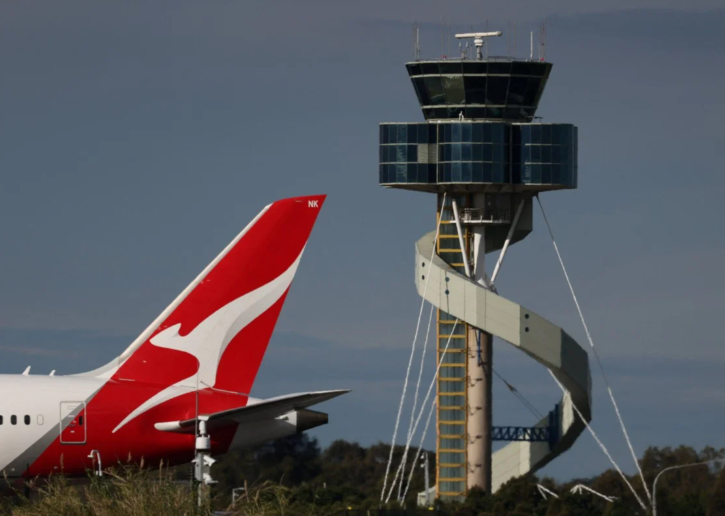
Sydney Airport Near Misses Spark Safety Probe and Catastrophic Risk Warnings
Australian transport authorities are investigating two additional aircraft taxiing incidents at Sydney Airport, compounding growing safety concerns following a string of recent near misses on the tarmac.
The Escalation of Tarmac Incidents and Official Investigations
The sequence of close calls at Sydney Airport has intensified scrutiny from regulators and industry veterans alike. According to the ATSB, the incident occurred at 10:00 AM on August 9, when a Virgin Australia flight—identified as flight VA555 bound for Perth—had its takeoff clearance rescinded by air traffic control shortly after issuance.
Simultaneously, a Qantas flight designated as QF728 began crossing the active runway more than 1,200 meters away from the Virgin aircraft, having also received clearance to taxi across. Just three hours prior to that near-miss, a separate event unfolded between a Jetstar aircraft and a Qatar Airways plane at the same facility. The abrupt braking required by the Jetstar Airbus A320 to avoid a collision with a Boeing 777 under tow resulted in an injury to a cabin crew member. These events followed a previous runway near-miss on July 27 involving a QantasLink flight and another Qantas plane.
Systemic Pressures and Industry Warnings on Aviation Standards
Veteran aviation professionals have stepped forward to voice alarm over the diminishing margins of safety within Australia’s air navigation network. Geoff Klouth, a retired commercial airline pilot with a 35-year career spanning flying instruction, commercial piloting with Ansett and Qantas, and a stint as a senior aviation safety investigator at the ATSB, warned that the airport faces severe risks if structural issues are left unaddressed.
According to Klouth, luck has played a major role in preventing actual collisions thus far, noting that the current system is not functioning effectively. He pointed to reduced staffing levels among air traffic controllers managed by Airservices Australia, alongside procedural strains overseen by airport management and the Civil Aviation Safety Authority (CASA), as key drivers behind his decision to retire from active flying in 2023.
Regulatory Responses and Multiple Layers of Defense
In response to the mounting scrutiny, ATSB Chief Commissioner Angus Mitchell emphasized the presence of multiple safety mechanisms during a press briefing. Mitchell noted that backup systems successfully intervened during all three recent occurrences to stop situations from deteriorating further.
For it to progress through to an actual accident, multiple things need to go wrong.”
While CASA declined to answer specific inquiries regarding systemic safety protocols due to the ongoing investigations, the regulatory body acknowledged that the third August incident remains a matter of significant interest. CASA confirmed it is actively collaborating with Airservices Australia while urging observers not to preempt findings. Sydney Airport officials reiterated that safety remains the primary priority, emphasizing that Australia maintains one of the safest aviation sectors globally, underpinned by strict regulatory oversight.
Keep reading