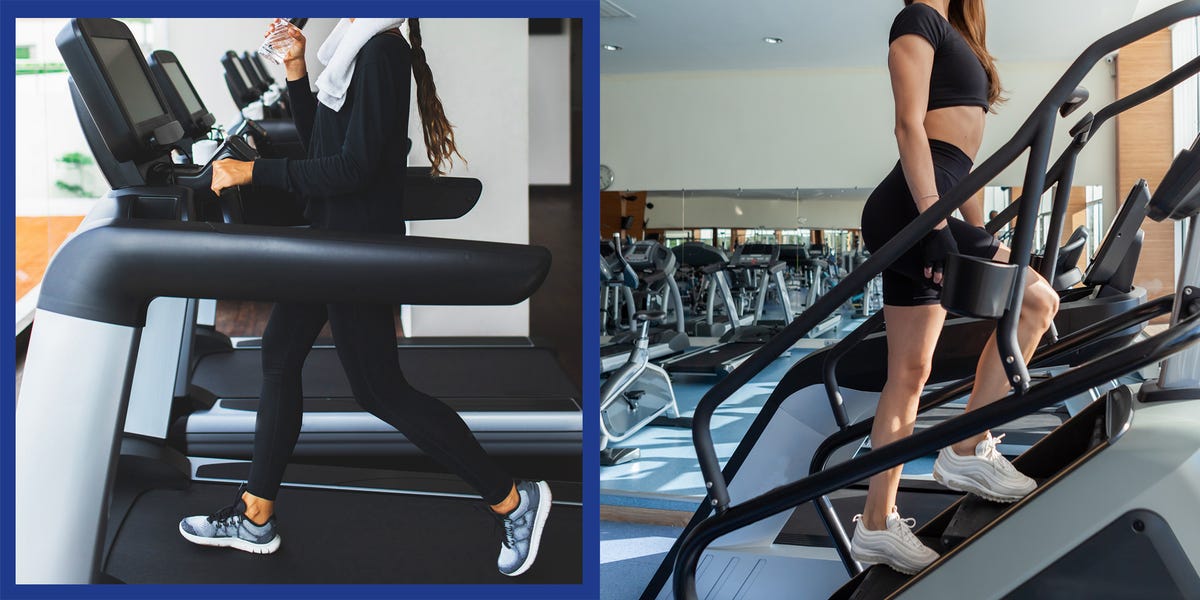
Incline Walking vs. Stair Stepper vs. Running: Which Is Best for You?
Deciding between incline walking and using a stair stepper for a cardiovascular workout requires weighing mechanical load, muscle activation patterns, and net caloric expenditure. Both machines offer distinct physiological demands, and according to fitness data analyzed by the American Council on Exercise (ACE) and insights shared in Women’s Health, selecting the right training option depends heavily on individual endurance and conditioning goals.
- A 150-pound person burns approximately 272 calories during 30 minutes on a stair stepper, compared to roughly 170 calories walking at a brisk 4 miles per hour on flat terrain, though adding a steep incline significantly increases the walking energy expenditure.
- Incline walking relies on vertical movement against gravity, forcing the heart and lungs to work hard without the elastic propulsion seen in flat-ground running, per exercise physiologist Dean Somerset, C.S.C.S.
- Stair climbing and steep incline walking both heavily recruit the quadriceps, glutes, hamstrings, and calves, but differ in joint angles and ankle dorsiflexion requirements as detailed by movement science expert Todd Buckingham, Ph.D.
Caloric Expenditure and Mechanical Load Comparisons
When evaluating workout efficiency, total energy expenditure remains a primary metric for many gym-goers. According to fitness calculators from the American Council on Exercise, a 150-pound individual typically burns about 272 calories climbing stairs for 30 minutes. In contrast, that same person burns roughly 170 calories walking at a very brisk pace of 4 miles per hour on a flat surface. Raising the treadmill deck into an incline elevates that walking calorie burn, bridging the gap between standard walking and vertical climbing machines.
Cardiovascular Demands and Gravity Resistance
Both incline walking and stair climbing serve as effective cardiorespiratory exercises that elevate heart rate per guidelines from the American Heart Association. Running on flat ground utilizes horizontal momentum and elastic energy storage in tendons. However, climbing stairs or walking up a steep incline shifts the body into vertical movement against gravity.

“Running on relatively flat ground involves more horizontal movement, whereas walking uphill takes more vertical movement, and moving vertically against gravity is definitely going to be harder than moving horizontally,” explains Canada-based exercise physiologist Dean Somerset, C.S.C.S. Because incline walking lacks the elastic propulsion of flat running, the cardiovascular system must work harder to supply blood and oxygen to working tissues, offering a comparable cardiorespiratory challenge.
Muscular Activation and Joint Mechanics
The biomechanics of vertical ascent alter muscle recruitment significantly compared to level terrain. Both stair steppers and incline treadmills require engagement from the quadriceps, hamstrings, glutes, gastrocnemius, soleus, and core stabilizers. Yet, the specific angles of engagement differ.

“Walking or running uphill changes the activation of the muscles you use because of the wider range of angles at which your hips, knees, and ankles are working,” notes Todd Buckingham, Ph.D., a triathlete and visiting professor of exercise science in the Department of Movement Science at Grand Valley State University. Inclines force the knee higher and require the glutes to generate greater upward force, while also increasing ankle dorsiflexion—bringing toes closer to the shin—which places a distinct load on the calf complex and anterior tibialis.