ETH Zurich Creates Autonomous Robotic Hand That Walks on Fingers
ETH Zurich Soft Robotics Lab Unveils Autonomous Anthropomorphic Hand That Walks on Fingers
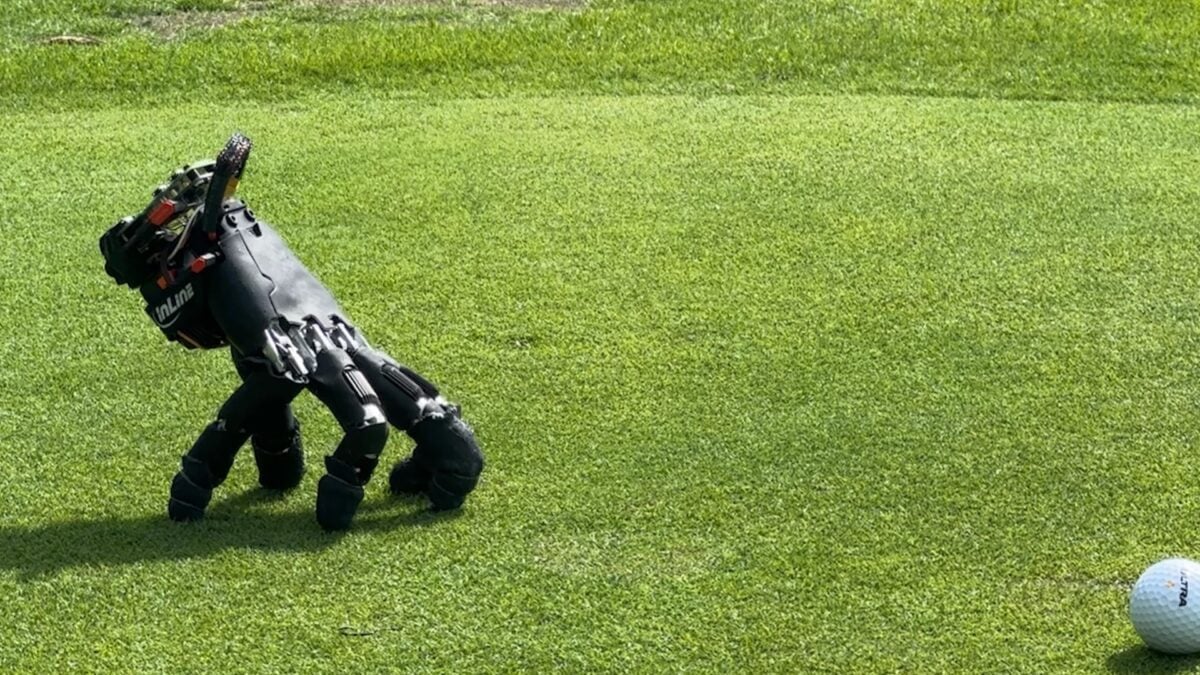
Researchers at the Soft Robotics Lab at ETH Zurich have developed an autonomous anthropomorphic robotic hand that relies on its fingers for locomotion, drawing conceptual inspiration from the fictional character Thing in The Addams Family. Unveiled in research made available on the preprint server arXiv, the 1.8-pound (818-gram) device operates independently of an arm, utilizing an onboard module equipped with a battery, sensors, and computing hardware to navigate cluttered spaces and manipulate objects.
The Tech TL;DR:
- Core Architecture: A standard anthropomorphic right hand featuring five fingers and 20 actuator joints, carrying an integrated on-board power and computing module.
- Mobility Profile: Weighs 818 grams and navigates surfaces like asphalt, gravel, and grass by executing dynamic finger-stepping sequences.
- Functional Range: Recovers autonomously from falls, presses keyboard commands, and solves puzzles like Sokoban.
Hardware Specifications and Actuation Mechanics
The autonomous hand integrates 20 total actuator joints, allocating four joints to each of the five fingers. To achieve stable locomotion without a traditional robotic arm or continuous tether, the ETH Zurich team packed a custom onboard module containing a power source, processing units, and sensory hardware directly onto the chassis, keeping total mass down to 818 grams (1.8 pounds). According to the published research paper, this detached architecture allows the device to operate independently in confined workspaces.
Controlling asymmetrical appendages presents distinct kinematic hurdles. Unlike traditional wheeled or multi-legged mobile robots, the five fingers differ in length and configuration, and the palm rests at an inherent tilt during movement. To solve this control problem, the research team implemented reinforcement learning protocols inside specialized parallel simulation environments. Each fingertip was assigned an individual target position tied to the hand’s natural stance, allowing the algorithm to dynamically calculate stepping patterns.
# Conceptual Kinematic Target Assignment
def calculate_step(finger_index, natural_stance_matrix):
    target_position = natural_stance_matrix[finger_index]
    if is_supporting_weight(finger_index):
        maintain_palm_equilibrium()
    else:
        execute_swing_phase(target_position)
When one finger lifts to execute a step or press a control surface, the remaining digits must immediately compensate to support the structural weight of the palm.
Terrain Navigation and Benchmark Testing
During physical evaluation phases documented by the research team, the standalone hand successfully traversed 14 distinct indoor and outdoor surfaces. Testing environments ranged from smooth tile and metal to unstructured outdoor substrates including asphalt, grass, gravel, and damaged stone. Beyond pure locomotion, the prototype demonstrated fine-motor capabilities by pressing keyboard commands, manipulating small cubes toward designated targets, and playing a level of the puzzle-solving video game Sokoban using directional arrow inputs.
Fall recovery represents another critical benchmark for autonomous mobile systems. When tipped over during testing, the prototype successfully righted itself by leveraging its five articulated digits to prop the chassis back into an operational stance. This self-righting behavior eliminates the need for external operator intervention when navigating unpredictable environments.
Future Integration Pathways for Mobile Manipulators
The primary engineering motivation behind the ETH Zurich project is expanding the utility of standard robotic manipulators. Traditional industrial setups require a bulky robotic arm to transport an end-effector to a workspace. By endowing the hand itself with independent mobility, larger base robots can simply deposit the module near a restricted opening or control panel. The hand can then independently navigate the final distance, execute the interaction, and return to the host system for retrieval.
“Giving robotic hands their own mobility could make future robots more versatile in the spaces and interfaces built for people,” the researchers note in their arXiv paper.
Frequently Asked Questions
How does the ETH Zurich robotic hand achieve locomotion without legs?
The device uses an anthropomorphic five-fingered design where individual digits act as legs. By utilizing reinforcement learning algorithms trained in parallel simulation environments, the system coordinates which fingers lift to take steps while the remaining fingers maintain structural support for the tilted palm.
What are the primary use cases for a mobile robotic hand?
According to the research paper, the detached hand can operate in confined workspaces by decoupling from a larger robotic arm. A host robot can place the hand near a restricted opening, allowing the hand to autonomously navigate to a control interface, complete a task, and return for retrieval.
Disclaimer: The technical analyses and security protocols detailed in this article are for informational purposes only. Always consult with certified IT and cybersecurity professionals before altering enterprise networks or handling sensitive data.